

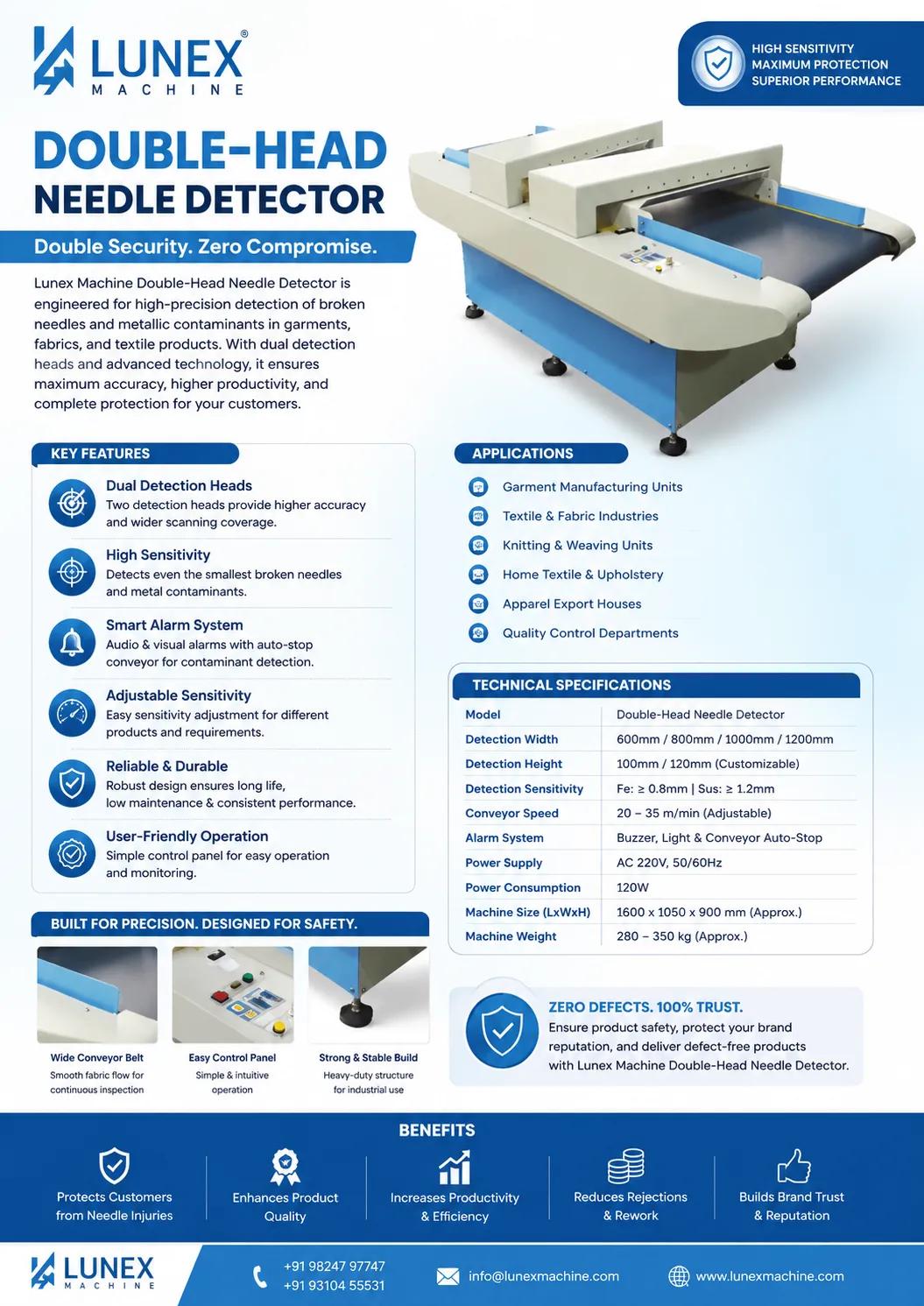
Needle Detector Machine
In the modern garment and textile industry, product safety and quality control are essential for maintaining customer trust and meeting industry requirements. Even a small broken needle fragment left inside a finished garment can create serious safety concerns, damage brand reputation, and lead to rejected shipments. A high-sensitivity needle detector machine helps manufacturers identify unwanted metallic needle fragments before products reach customers. Lunex Machine provides needle detection solutions designed to support garment manufacturers, textile businesses, and apparel exporters in improving product safety and inspection efficiency.
What Is a High-Sensitivity Needle Detector Machine?
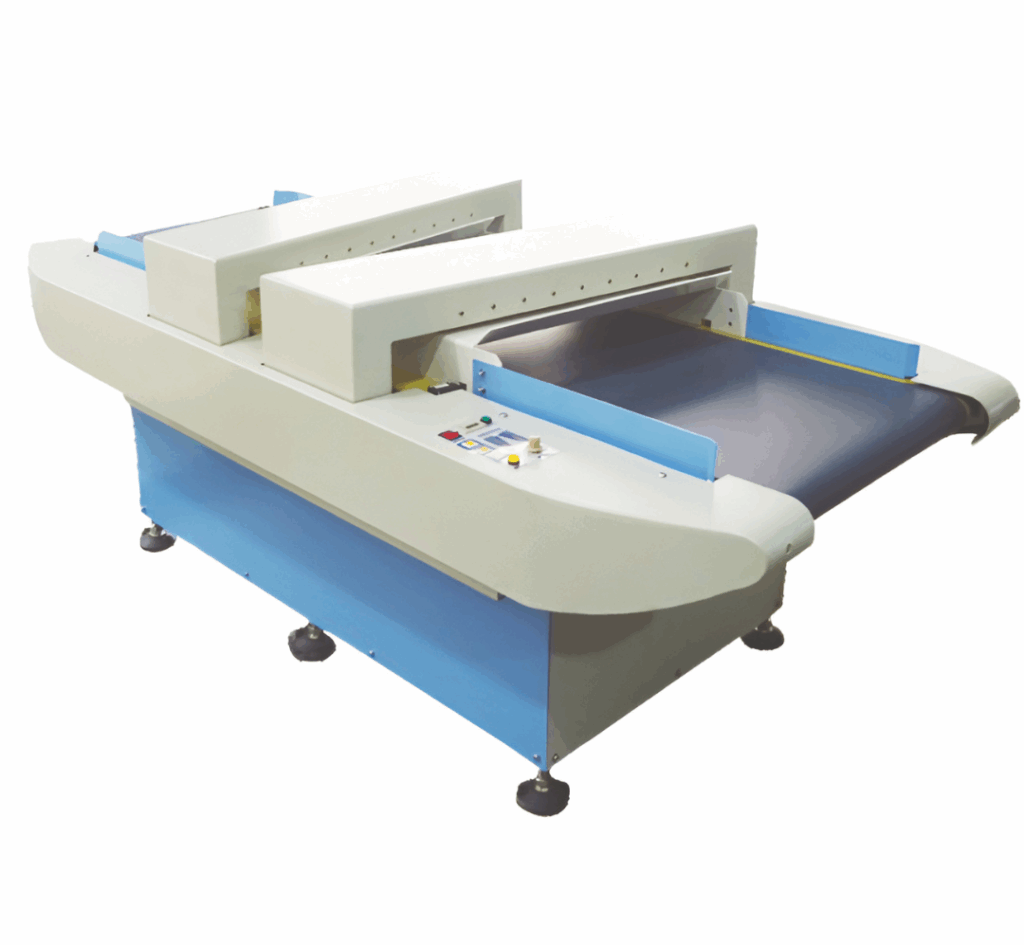
A high-sensitivity needle detector machine is specialized inspection equipment used to detect ferrous metal contaminants, including broken sewing needle fragments, in finished products. These machines are commonly used in garment manufacturing, textile production, footwear manufacturing, and other industries where metal contamination must be controlled.
During inspection, products pass through a detection area, where the machine checks for the presence of detectable metal. When a metal fragment is identified, the system can activate an alarm and, depending on the model, stop the conveyor or signal the operator to remove the affected product.
This inspection process helps manufacturers identify potential hazards and improve the reliability of their final quality checks.
Why Product Safety Matters in Garment Manufacturing
Garment manufacturers handle numerous sewing operations every day. Needles can break because of incorrect machine settings, fabric thickness, operator mistakes, or normal wear and tear. Although production teams may follow careful procedures, small fragments can sometimes remain unnoticed.
A needle detector machine provides an additional inspection step to help identify these risks before finished garments are packed and dispatched.
Key benefits include:
Improved product safety: Helps identify detectable broken needle fragments before products reach customers.
Better quality control: Adds a reliable inspection stage to the garment finishing process.
Reduced product rejection: Helps prevent avoidable quality issues and potential shipment rejections.
Brand protection: Supports manufacturers in maintaining customer confidence and professional standards.
Improved inspection efficiency: Makes routine product screening more consistent and systematic.
By integrating suitable needle detection equipment into production workflows, manufacturers can strengthen their quality assurance procedures.
Key Features of a High-Sensitivity Needle Detector Machine
Selecting the right needle detector machine requires careful consideration of the production environment, product types, and inspection requirements. Several features can improve inspection performance and operational convenience.
1. High Detection Sensitivity
Sensitivity is one of the most important factors when selecting a needle detector machine. A suitable system should be capable of detecting small ferrous metal fragments under specified operating conditions. Actual performance depends on the machine model, product characteristics, fragment orientation, and operating environment.
Manufacturers should evaluate detection performance using appropriate test samples before selecting equipment for their production line.
2. Automatic Alarm System
An automatic alarm alerts operators when the machine detects a potential metal contaminant. This helps production staff identify products that require further inspection and follow the company's established corrective procedures.
3. Conveyor-Based Inspection
Conveyor-type needle detector machines allow products to pass through the inspection area systematically. This design can support continuous inspection and help businesses manage larger production volumes more efficiently.
4. Adjustable Sensitivity Settings
Different products and materials may require different inspection settings. Adjustable sensitivity can help operators configure the machine according to product characteristics and the manufacturer's recommended operating procedures.
5. User-Friendly Controls
Easy-to-operate controls help staff perform routine inspections, conduct test checks, and manage production workflows. Clear indicators and accessible controls can also reduce training time and operational errors.
Applications Across Different Industries
A high-sensitivity needle detector machine is useful wherever broken sewing needles or similar ferrous metal fragments may create product safety concerns.
Garment manufacturing: Inspect shirts, trousers, jackets, uniforms, children's clothing, and other finished apparel.
Textile production: Check suitable textile products for detectable metal fragments introduced during manufacturing.
Footwear manufacturing: Inspect applicable footwear products, depending on their material composition and construction.
Soft toys and home textiles: Support inspection of products such as stuffed toys, cushions, bedding, and other suitable fabric-based items.
Apparel export businesses: Strengthen final inspection procedures and help meet buyer-specific quality requirements.
The machine's suitability should always be confirmed for the product being inspected, particularly when products contain metal accessories or materials that may affect detection.
How to Choose the Right Needle Detector Machine
Before purchasing a needle detector machine, manufacturers should evaluate several practical factors.
First, consider the required detection sensitivity and the types of products being inspected. The machine must be suitable for the dimensions, materials, and construction of the finished goods.
Second, assess conveyor dimensions and production capacity. A machine that fits the product range and production volume can help maintain an efficient inspection workflow.
Third, review alarm functions, conveyor-stop options, operating controls, maintenance requirements, and after-sales technical support.
Finally, request a product demonstration or sample test wherever possible. Testing representative products helps confirm whether the equipment performs effectively under actual production conditions.
Manufacturers should also establish procedures for routine sensitivity verification, rejected-product handling, and documentation of inspection results.
Why Choose Lunex Machine?
Lunex Machine supports garment and textile businesses looking for practical machinery solutions to improve manufacturing quality and productivity. Its needle detector machine range can help manufacturers strengthen inspection processes and reduce the risk of detectable broken needle fragments reaching customers.
When selecting equipment from Lunex Machine, businesses can evaluate suitable models according to their production requirements, product dimensions, and desired inspection capabilities. Choosing appropriate machinery and following consistent operating procedures can help establish a more reliable quality control system.
Conclusion
Improving product safety requires careful manufacturing practices and effective final inspection. A high-sensitivity needle detector machine helps garment manufacturers identify detectable metallic needle fragments, strengthen quality control, and protect customer confidence.
For businesses seeking dependable needle detection solutions, Lunex Machine offers options to explore for garment and textile inspection requirements. Investing in suitable equipment, regular testing, and effective inspection procedures can help create safer products and support consistent manufacturing quality.
Explore needle detector machine solutions from Lunex Machine: https://lunexmachine.com/