

Needle Detector Machine Enhancing Customer Trust Through Better Product Safety

Needle Detector Machine
In the modern textile and garment manufacturing industry, product safety and quality assurance are essential for building long-term customer relationships. Customers expect garments that are not only stylish and durable but also safe to wear. Even a small broken needle fragment left inside a finished garment can create serious safety concerns, damage a brand's reputation, and result in costly product returns. This is why a Needle Detector Machine has become an important part of quality control in garment manufacturing. Lunex Machine provides advanced needle detection solutions that help garment manufacturers improve product safety, maintain inspection standards, and strengthen customer trust.
Why Product Safety Matters in the Garment Industry
Product safety is one of the most important responsibilities of every garment manufacturer. During cutting, stitching, embroidery, and finishing operations, sewing machine needles can sometimes break. Small metal fragments may accidentally remain inside garments and become difficult to identify through manual inspection.
If contaminated garments reach customers, manufacturers may face complaints, rejected shipments, financial losses, and damage to their brand image. For export-oriented businesses, maintaining strict inspection standards is especially important because international buyers expect consistent product quality.
Installing a reliable needle detector machine helps manufacturers identify potential metal contamination before finished garments are packed and dispatched.
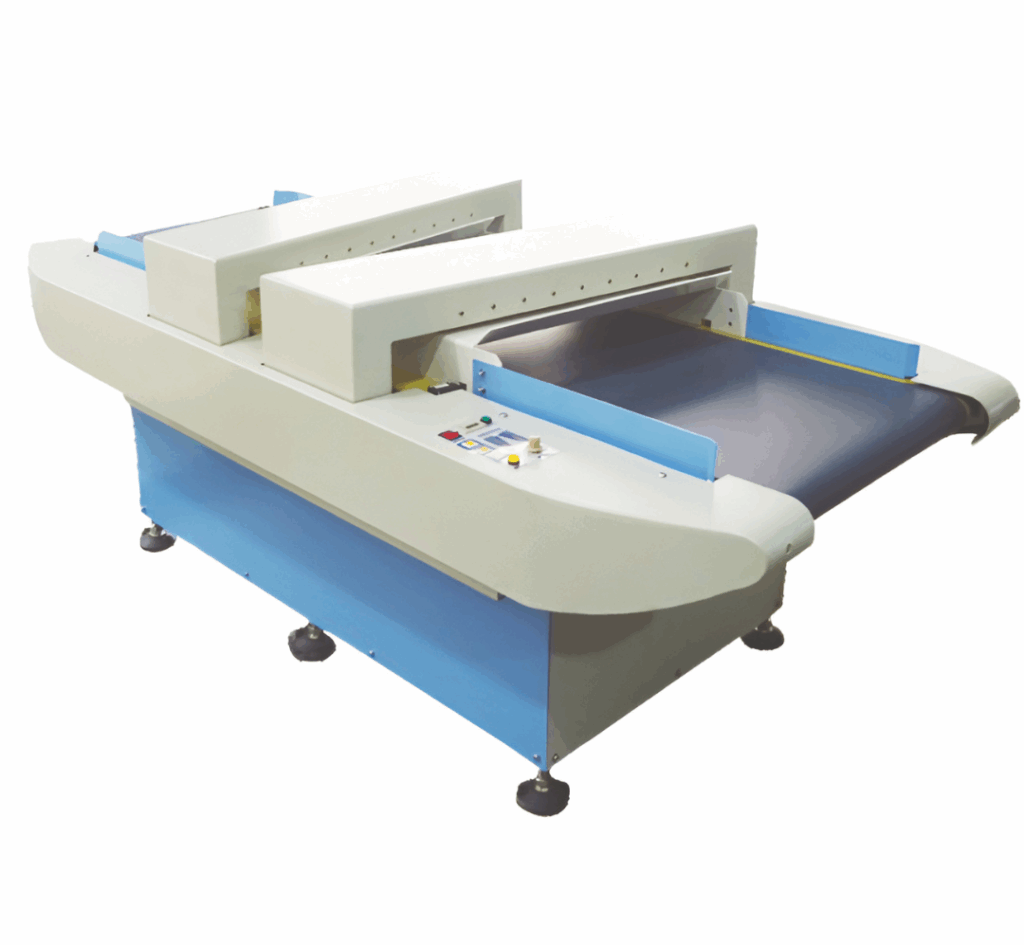
What Is a Needle Detector Machine?
A needle detector machine is an industrial inspection system designed to detect broken sewing needle fragments and other ferrous metal contaminants in garments and textile products. It uses a sensitive detection system to identify metallic particles that may not be visible during ordinary manual inspection.
Garment manufacturers commonly install these machines in their final quality inspection departments. Finished garments are passed through the detection area, where the machine checks for unwanted metal contamination.
When a metal object is detected, the machine generally provides an alarm or warning to alert the operator. Depending on the machine configuration, additional features such as conveyor stopping and automatic rejection may also be available.
How Needle Detector Machines Improve Product Safety
A modern needle detector machine supports garment safety through several important functions:
1. Detection of Broken Needle Fragments
Broken sewing machine needles can create hidden risks in finished garments. A needle detector helps identify these metal fragments before products reach customers.
2. Reliable Final Inspection
Manual inspection alone may not identify every small metal fragment. Automated detection provides an additional quality control step and supports more consistent inspection procedures.
3. Reduced Product Contamination Risks
By identifying unwanted ferrous metal particles, manufacturers can reduce the possibility of contaminated garments entering the packaging and shipping process.
4. Improved Quality Assurance
Regular inspection using a needle detector helps garment factories maintain documented quality control procedures and improve their overall production standards.
5. Better Customer Confidence
Delivering properly inspected garments demonstrates a manufacturer's commitment to product safety. This can help build stronger relationships with buyers, retailers, and end customers.
Importance of Advanced Detection Technology
Modern garment manufacturing requires inspection equipment that combines accuracy, reliability, and ease of operation. Advanced needle detector machines are designed to support different production requirements while maintaining effective metal detection performance.
Depending on the model, machines may include adjustable sensitivity settings, digital controls, automatic alarms, conveyor systems, and user-friendly operating panels. These features allow operators to manage inspection processes efficiently.
Digital controls are particularly useful because they help operators adjust machine settings according to garment types and inspection requirements. Proper sensitivity adjustment is important for achieving reliable results while minimizing unnecessary alarms.
For manufacturers handling large production volumes, automated inspection equipment can also improve workflow efficiency and reduce dependence on manual checking.
Why Garment Manufacturers Need a Needle Detector Machine
Garment manufacturers work with different materials, designs, and production processes. From children's clothing and casual wear to uniforms and export-quality garments, every product requires suitable quality inspection.
A needle detector machine is particularly valuable for:
Garment manufacturing companies.
Textile production units.
Export-oriented garment factories.
Children's clothing manufacturers.
Uniform and workwear producers.
Apparel quality inspection departments.
Large-scale stitching and embroidery units.
By including metal detection in the final inspection process, businesses can improve their ability to identify potential contamination before shipment.
Needle Detector Machine and International Quality Standards
International garment buyers often have strict requirements regarding product safety and metal contamination. Manufacturers supplying international markets must follow appropriate inspection procedures to meet buyer expectations.
A needle detector machine helps businesses strengthen their internal quality control systems and demonstrate a responsible approach to garment inspection.
However, machine installation alone does not guarantee compliance. Manufacturers should also establish proper inspection procedures, train operators, perform regular sensitivity checks, and maintain inspection records according to applicable buyer requirements.
Combining trained personnel with reliable detection equipment creates a stronger quality assurance process.
How Lunex Machine Supports Better Garment Inspection
Lunex Machine focuses on providing industrial machinery solutions that support modern textile and garment manufacturing requirements. Its needle detector machine solutions help businesses strengthen their final inspection processes and improve product safety.
For garment manufacturers, selecting suitable inspection equipment is an important investment in production quality and customer satisfaction. Factors such as detection sensitivity, conveyor dimensions, operating controls, production capacity, and maintenance requirements should be considered before purchasing.
With suitable needle detection technology, manufacturers can establish a more reliable inspection process and reduce the risks associated with broken needle contamination.
Lunex Machine aims to support garment businesses with practical machinery solutions that contribute to efficient production and improved quality control.
Tips for Getting Better Results from a Needle Detector Machine
To maintain consistent inspection performance, garment manufacturers should follow a few important practices:
Train operators to use the machine correctly.
Adjust sensitivity according to product and buyer requirements.
Test machine performance regularly using appropriate test pieces.
Maintain inspection records for quality assurance.
Keep the detection area clean and properly maintained.
Follow manufacturer-recommended servicing procedures.
Reinspect products whenever contamination is suspected.
These practices help businesses maintain reliable inspection standards and make better use of their detection equipment.
Conclusion
A Needle Detector Machine is an essential investment for garment manufacturers looking to improve product safety, strengthen quality control, and build customer confidence. By detecting broken needle fragments and unwanted metal contaminants before shipment, businesses can reduce product risks and maintain higher inspection standards.
With advanced needle detection solutions, Lunex Machine supports garment manufacturers in developing safer and more efficient inspection processes. Investing in suitable needle detection equipment is not just about identifying metal particles; it is about protecting customers, maintaining brand reputation, and building long-term trust in the competitive textile industry.